Feedback

Simfin

online safety and digital citizenship specialist

 Tagged with abuse


18 March 2026

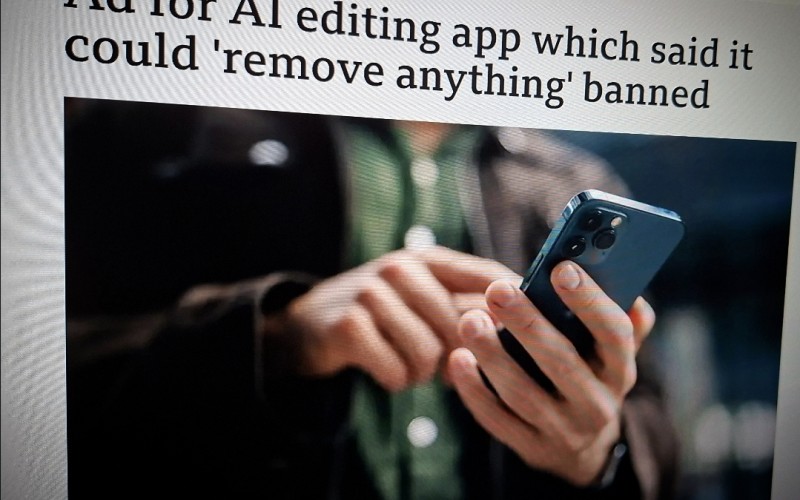
The YouTube ad for PixVideo - AI Video Maker, seen in January, showed a "before" and "after" image of a young women, with red scribble overlaid on her midriff in the former, and parts of her bare skin exposed in the latter.

Text across the bottom of the picture stated: "Erase anything" followed by a heart-eyes emoji.

Read more

27 February 2026

Instagram's parent company, Meta, is investigating AI-generated social media accounts that sexualise disabled people appearing on its platform.

It comes after the BBC flagged dozens of profiles showing AI-generated images of women with disabilities, including Down's syndrome or vitiligo.

Some profiles post fake images and videos of women with missing limbs, visible scarring or in wheelchairs. Many are in sexualised positions, wearing revealing clothing.

One profile, claiming to be conjoined twins, has about 400,000 followers, despite only joining Instagram in December 2025.

Kamran Mallick, chief executive of Disability Rights UK, said the emergence of "accounts that fetishise, mock, or monetise the identities of disabled people is nothing short of horrific".


Read more

19 February 2026

Tech platforms would have to remove intimate images which have been shared without consent within 48 hours, under a proposed UK law.

The government said tackling intimate image abuse should be treated with the same severity as child sexual abuse material (CSAM) and terrorist content.

Failure to abide by the rules could result in companies being fined up to 10% of their global sales or have their services blocked in the UK.

Read more

30 January 2026

Abusers are increasingly using wearable technology like smartwatches and rings to stalk, harass, and coerce survivors.

New data released by Refuge shows a 62 per cent rise in referrals to its technology-facilitated abuse and economic empowerment team in 2025 to 829, up from 512 in 2024.

The charity said the rise is being driven by the “increasing accessibility” and “reach” of wearable technology that allows abusers to “stalk, surveil and control survivors” even from a distance.

Read more